Nonna’s Italian Tiramisu Recipe

The authentic tiramisu recipe comprises rich layers of bold espresso, cocoa, and creamy mascarpone cheese, finishing with ladyfinger biscuits, making it one of Italy’s most popular desserts. The common question of ‘is tiramisu Italian? is followed by an answer of yes! What makes the dessert Italian is the presence of Savoiardi lady fingers, completing any tiramisu with a light, crisp texture. England uncovered tiramisu when English intellectuals and artists started consuming – and adoring it – in Florence. Upon returning home, they spread the news about the tasty dessert to their nation. 

Is Tiramisu Italian?

Despite the simplicity of the ingredients, Tiramisu’s origin is controversial, and fiercely debated amongst the Italian – so typical! Translating to “pick me up”, or synonyms like “lift me up” or “pull me up”, the layered dessert is part of an ongoing regional battle.

Let us begin in late 19th century Tuscany, where Tiramisu was supposedly first invented in Siena, for Grand Duke Cosimo III de Medici being labelled “zuppa del duca” – literally “The Duke’s soup”.

Following on, we move to Piedmont (Turin), where according to reports, Camillo Benso also invented the delicacy. Likewise, writer Pellegrino Artusi describes a similar recipe in his book – Kitchen science and the art of eating well – published in 1891. However, he did replace mascarpone with butter! 

In more recent times, it is said that Roberto Linguanotto, located in Veneto, Italy, invented the Italian tiramisu recipe in the early 1970s at the restaurant Le Beccherie in Treviso. This restaurant was run by the Campeol family from 1939 – 2014, when rumours swirled that the owner Ada Campeol had initially come up with the dessert. With all this information in mind, one thing we can approve as factual is that tiramisu is indeed Italian! 

Authentic Tiramisu Recipe

Despite the conflicting stories about who should get credit for having created tiramisu , one thing stayed the same: the classic tiramisu recipe! With a prepping time of 30 minutes, a cooling time of 3 hours and eight ingredients later, prepare your taste buds for the most elegant dessert that will arguably land on them. Are you and your cooking utensils ready? Let’s start.

Preparation time: 1 hour 

Preparation time: 1 hour
Cooling time: 3 hours
Serves: serves 6-8
Dietary: Vegetarian

Ingredients:

  • 350g mascarpone cheese
  • 120g granulated sugar
  • 60g pasteurised egg yolk
  • 90g pasteurised egg white
  • 200 g Savoiardi ladyfingers
  • 30g unsweetened cocoa powder
  • 400g coffee

Method

  1. Prepare the coffee (we suggest using the authentic Italian moka pot). Once it’s done, you can choose whether to sweeten the coffee or not, but we recommend leaving it as bitter as it comes. Then let the coffee cool down in a bowl.
  2. Beat the egg yolk and half the sugar (60g) in a bowl until the mixture becomes clear, thick, and fluffy – this will take at least 10 minutes.
  3. In another bowl, beat the mascarpone to make it creamy, then add the yolk mixture. Keep on beating the new mixture until it gets thick.
  4. Whisk the egg white until it looks pale. Then add the remaining sugar (60g) in three separate stages and keep on whisking until the mixture gets creamy and smooth.
  5. Mix the two creams very gently with a wooden spoon, from bottom to top, until the mixture feels very smooth. Put the cream obtained in a piping bag with a round nozzle (13mm tip diameter) and store it in the fridge.
  6. Start displaying the first layer of ladyfingers In a ceramic baking pan (around 22x16cm). Soak them in the coffee – that should be lukewarm to prevent the biscuits from getting too soft –, let them drain well and place them on the bottom of the pan.
  7. Cover the ladyfingers with cream by squeezing the piping bag. Make a layer of at least 3cm and sprinkle it with plenty of cocoa powder that you will sift from a small colander. Repeat the procedure to make another layer – pro tip: place the ladyfingers in the opposite direction of the first layer. By combining a horizontal and a vertical layer you will be sure that the tiramisu will cut perfectly.
  8. Finish the tiramisu with a sprinkling of cocoa powder, cover it with cling film or kitchen foil, and leave it in the fridge for at least 3 hours.
  9. When it’s time to serve it, you just have to cut it into cubes with the help of a spatula, remove it from the pan and place it on a dessert plate. Now it’s time to enjoy your tiramisu in all its universally recognised goodness!

Alternative versions

In the face of tradition stand alternative tiramisu recipes featuring adaptations of the classic ingredients. Eater states that there are at least 200 variations, with pastry chefs adding zabaglione, almonds, whipped cream or any of a variety of spirits. More so, we at Remeo Gelato have curated alternatives, including a Tiramisu Gelato Dessert with Coffee and Cocoa. Like the idea? Check out our full range of delicious gelato layers!

A brief history of gelato

Botolino reveals that Ancient Palestine reapers and Ancient Egyptian Pharaohs compressed snow in slush form, creating the first form of gelato. The first recipe for gelato was successfully conducted in Rome but the fall of the Roman empire meant the frozen delicacy disappeared. The Arabic form of gelato was more refined & lighter – titled “sherbert” and was introduced back into Southern European regions. The Crusaders brought the Arabic sherbert back to Northern Europe too. 

During the Renaissance, three Italian men – Ruggieri, Buontalenti & Coltelli – were known as the first gelatieri (gelato makers). Ruggieri concocted a sorbetto deemed the most delicious dessert ever, Buontalenti first introduced milk & eggs into the mixture and Coltelli used sugar instead of honey and mixed salt with the ice to make it cooler.

When was ice cream invented?

After Italian-native Giovanni Bosio relocated to New York City in 1770, he paved the way for New Yorkers and Americans alike to create their own alternative to manufacturing Italian gelato. It was a historical event in the history of ice cream. After setting up shop and opening his profitable gelateria in the city, customers adhered to the new dessert and fell in love with Italian-born delicacy. Eventually, Americans, in general, began making changes to the original recipe and started producing what was soon to be known as ice cream – to the dismay of present Italian gelato purists. As you know from our piece about the difference between gelato and ice cream, Italians tend to be quite protective with their foods!

During the same period, Nancy Johnson made history with the invention of a hand-cranked ice cream maker and a certain Fuller did the same in Europe. This soon led to the result of gelato being overshadowed by ice cream. 

Without a cone, it would seem the frozen treat was missing something, but thanks to Italo Marconi, the first cone mould was to be invented – essentially making the consumption of ice cream easier. 

Okay, but where does ice cream actually come from?

Not to hinder its Italian heritage, ice cream history first originated in China when frozen milk & rice pudding was assorted and explored by Marco Polo who was on his travels at the time, relaying the Chinese method to his country upon his return to Italy. We can say, though, that the Italians deserved the credit for the global expansion of gelato, as you would expect. 

However, the question of which country invented ice cream? and was ice cream invented in Italy? Could now endeavour more malice than agreement, but with factual evidence now defrosted, it is said that the ice cream origin first stemmed from China, then to Italy and as one would expect, then to the rest of the world!

The modern history of gelato

Who invented gelato? You may ask: well, the victorious progression of gelato can be traced back to the three men who are called the first gelatierigelato makers. Cosimo Ruggieri, Bernardo Buontalenti and Francesco Coltelli all contributed to historical advancements in gelato as we know today. 

Ruggieri was once a chicken seller who impressed the court of Caterina de Medici with his sorbetto, whilst in competition to “prepare a singular dish never seen before”. Ruggieri later accompanied Caterina to France, where he taught his recipe to French cooks. 

Later, Buontalenti, who was a famous painter, architect & engineer, has been credited as the inventor of gelato due to his introduction of milk and eggs to the gelato mixture. 

Lastly, enter Coltelli, a Sicilian fisherman who inherited a contraption used to produce sorbetto who contributed the use of sugar in substitute to honey, and mixed salt with ice to make the gelato colder. He soon relocated to Paris, opening Cafe Procope. 

More modern advancements in the history of gelato involve the invention of a refrigerated batch freezer which granted manufacturers the opportunity to consistently and rapidly produce gelato. 

After the slow release of original-recipe gelato, throughout the 1920s to 1930s, street vendors granted accessibility for the general public to consume gelato. 

Following on, from the 1960s to the 1990s, the production of pastes & powders – also known as additives in present-day terminology – flavored gelato to make the process easier. Despite the convenience, this alternative lowered the quality of the gelato and made offerings more standardized. However, the Slow Food Movement resulted in the return to value ingredients & artisanal methods and elaborate on delicious flavors, including the classic stracciatella. Invented by Enrico Panattoni in 1962: the gelato entrepreneur made gelato run through shards of dark chocolate, creating its unique texture instead of cracking eggs into the mixture. 

Now gelato has transcended beyond Italian borders, we can appreciate the traditional craft of the frozen delicacy. 

Gelato today – trends and innovations

Modern advances in the food & beverage industry present exciting opportunities to the sector, not just in the consumption of products but also what goes into the service before a product is consumed. Here at Remeo Gelato we pride ourselves on our sustainable 100% plant-based packaging that is easily recyclable, accompanied by a mouth-watering range of gelato & sorbetto varieties, so everyone can enjoy the final course! Is gelato vegan? Is the question we get asked a lot at Remeo and with a taste like no other, we had to make a vegan-friendly range! To sum up the sheer evolution of gelato, it is expected that by 2024 the market will grow to nearly $75 billion, with a 30% increase since 2017!

The mass development of gelato across the world isn’t much of a surprise when flavours that melt in your mouth exist in almost every corner of the world, with the classic chocolate at number in the United States, almond holds the top spot in Australia and of course one of our best sellers here at Remeo Gelato – Mascarpone gelato with two delicious layers of raspberry and biscuits!

Gelato vs Ice Cream: what is the difference?

What’s the difference between gelato and Ice Cream?

It’s one of these summer days. The sun is shining, the cicadas singing. You’re thinking a frozen dessert could make this day perfect, so why not go for gelato? Or for some ice cream? What’s the difference anyway? Is there really a difference , or is gelato just a fancy way of calling regular ice cream? Although their similarity is undeniable, gelato and ice cream are indeed not the same: the taste and texture might give you a hint, but the process and ingredients are where the real difference lies.

Gelato vs Ice Cream: the commonalities

Let’s not fool ourselves: from a distance, no one, even the biggest gelato lovers, can tell the difference between the two awesome creamy frozen desserts. Both have in common their core ingredients, dairy (milk and cream) and sugar, paired with fresh fruit and nut puree/paste, sapiently combined to produce refreshing awesomeness one scoop at a time.

The different combinations of these, however, give birth to either ice cream or gelato. A more creamy combination produces ice cream` – generally fatter as a result – whereas gelato traditionally contains less cream and fat, amounting to typically 5-7%, compared to the usual 10%+ of ice cream. As a matter of fact, the overseas FDA defines ice cream as a dairy product with at least 10% of its calories coming from fat.

Ice cream – more cream, less milk

As mentioned above, the measurements of milk and cream in ice cream are different between gelato and ice cream. The prevalence of cream in ice cream production means a higher fat content, but that’s not the only difference: ice cream also uses egg yolks (adding more fat content) as a stabiliser, whereas gelato does not contain eggs.

Another differentiation between the two comes after pasteurisation when air is added during the churning process: ice cream has considerably more air, also known as overrun, as its volume increases by a large margin during churning.

Gelato: light and natural

The word gelato, meaning ice cream in Italian, has created uncertainty around the two concepts, often compared but not quite the same. In terms of ingredients, gelato’s recipes typically contain a higher proportion of whole milk to cream. The lower cream content results in a lighter mix, having proportionally less fat than its creamier counterpart. Gelato is also churned at a slower speed than ice cream, producing the famous, dense consistency that makes gelato unique and loved all over the world.

To compare, gelato contains typically between 25-30% air, whereas ice cream’s air content can go up to 50 percent. In other words, scoop for scoop, you get more gelato than you would ice cream, as the gelato mixture is denser and rich in flavour. The lesser air and weaker structure mean that gelato melts quicker and has a unique mouthfeel, impossible for ice cream to match. Tasting a scoop of N.4 Pistachio ice cream, for example, sends your taste buds to Bronte, Italy, where the finest pistachios are sourced, turned into paste, and ultimately to our jar and your table.

Is gelato healthier than ice cream?

In short, both gelato and ice cream are frozen desserts, usually eaten as treat or dessert than an everyday meal. However, a healthy diet can incorporate both ice cream and gelato if eaten in moderation: at the end of the day, who in their mind would want to miss out on so much awesomeness?

Still, the question needs an answer, and the head to head has a clear winner. The main difference between ice cream and gelato is their fat content. With only 4-9% fat to the usual 10-25% of ice cream, gelato usually is lighter and healthier. 

Per portion, however, the answer is clear, gelato is typically healthier than ice cream.

Taking our N.1 Vaniglia del Madagascar vanilla gelato, for example, we can see that, per 100 ml, it contains:

  • 117 kcal
  • 5.2 g of fat (3.6 saturates)
  • 15 g carbohydrates (sugars)
  • 2.6 g proteins, and minimal salt

Popular vanilla ice cream jars have very different nutritional values per 100 ml :

  • 195 kcal
  • 11.9 g of fat
  • 19.5 carbohydrates
  • 3.4 g protein

A 100 ml portion of traditional, average retail vanilla ice cream lands you 50% more calories than eating our gelato, making gelato the obvious healthy choice.

The bottom line

We have researched the differences between gelato and ice cream in their ingredients and production. We also learned that, for the same portion, gelato is healthier than ice cream. We love both, but, of course, we are biased towards our fresh and light Italian gelato.

What a tasty debate! Didn’t it make you want to get a scoop of gelato? What are you waiting for? Visit our shop and order some goodness!

The Art Of Aperitivo Italiano

Nothing says carefree summer quite like a frozen cocktail. Perfect as a refreshing treat with friends or as a dessert after dinner – “digestivo” as we say in Italian – our cocktails are some of the oldest and most beloved in the world, and with one sip will transport you to warm Italian breezes and lazy riviera afternoons. We’ve recreated three of our favourites (and given them a Remeo twist!) to bring an authentic taste of Italia into your home.

Sgroppino 

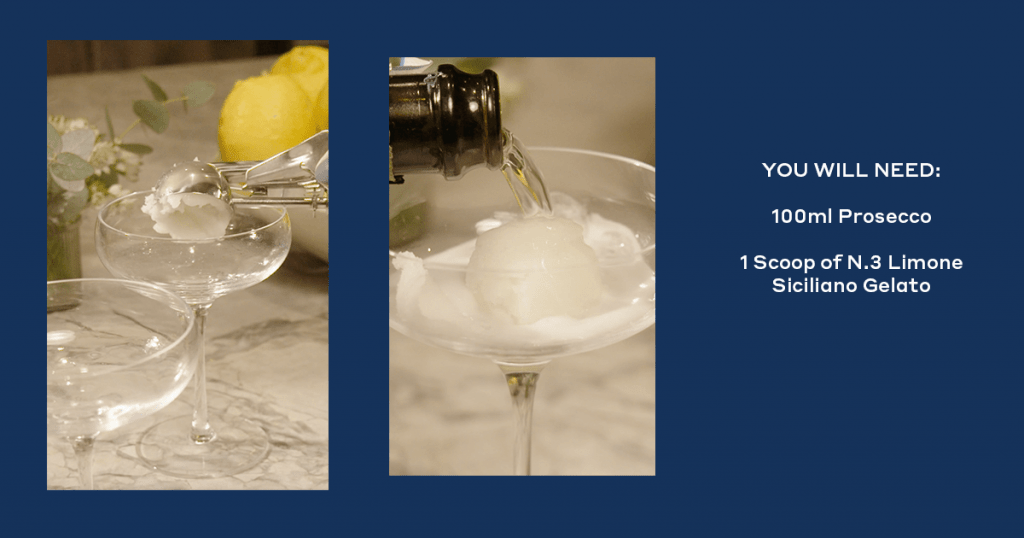
Created in the 15th century for Italian aristocrats, the Sgroppino was originally designed as a between course palette cleanser due to its refreshing, crisp taste and simplistic ingredients. These days, a Sgroppino is more often enjoyed as an after-dinner cocktail, but still retains its delicate taste and reliance on a few simple, high-quality ingredients – just like our Lemon Sorbetto.

Our friends at Della Vite created a Remeo x Della Vite Sgroppino; click here to see the Delevingne sisters in action. Allow our N.3 Siciliano Limone Sorbetto to rest for 15 minutes once out of the freezer, to be smooth enough to scoop and simply pour over a Prosecco of your choice.

Mango Bellini

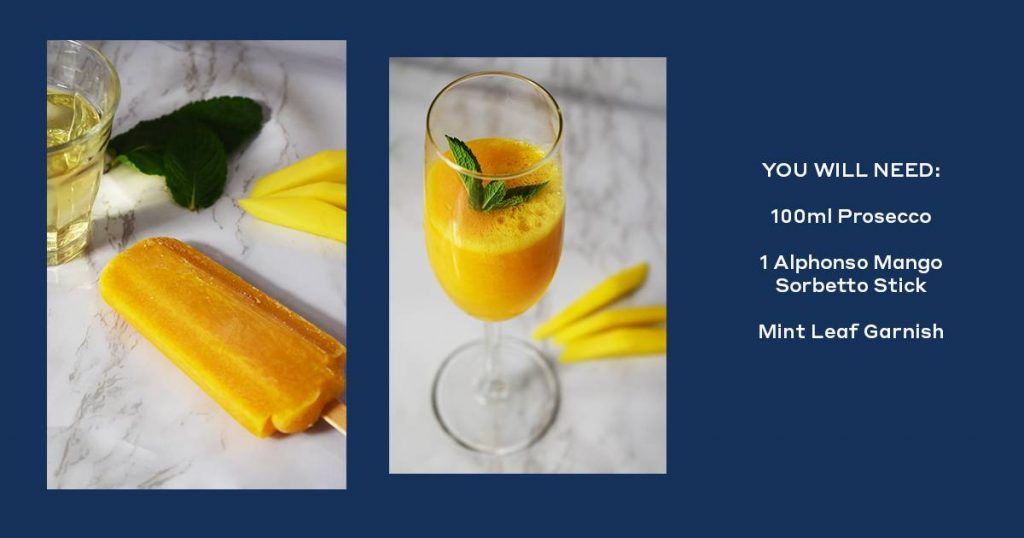
The classic Italian Bellini was actually inspired by an artist- a soft pink hue painted by Venetian Giovanni Bellini captivated a young Italian mixologist so much that he was compelled to transform it into the cocktail that would one day be enjoyed all across the world. Our Remeo mangoes are sourced in India and selected carefully from the Alphonso variety, considered to be the most flavourful. The result is a sparklingly sweet cocktail, worthy of the great Giovanni himself.

To create the perfect Mango Bellini, blend one of our Alphonso Mango Sorbetto Sticks with a dash of water to make a mango coulis and then simply pour over 100ml of Prosecco and garnish with a fresh mint leaf.

Tiramisu Martini

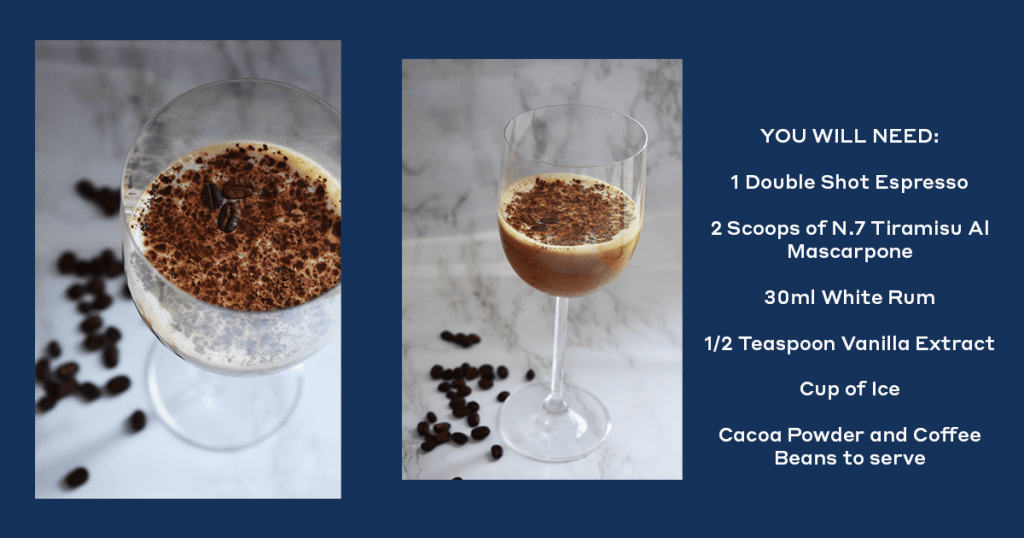
A modern twist on an old favourite, the smooth and rich flavour of our N.7 Tiramisu Al Mascarpone Gelato creates a velvety and indulgent Martini – perfect as an after dinner dessert on a carefree summer night. The trick to a good Martini is simplicity – quality alcohol and fresh ingredients combine in the perfect combination of classic Italian dessert and sophisticated after dark aperitivo.

To create our take on an Espresso Martini, melt two scoops of our N.7 Tiramisu Al Mascarpone Gelato and add to a cocktail shaker along with the rum, coffee, vanilla extract and ice and shake for a couple of minutes. Pour and serve with a sprinkling of cocoa powder and three coffee beans.

Click to shop our whole range of Gelato, Sorbetto and Sticks here. 

Cin Cin!

This week’s best free events by Time Out!

Our “Gelato Day” on July 11th, featured in Time Out magazine as one of the best free events of the week!

GET THE SCOOP: Free Gelato at Hoxton Hotel Shoreditch

Thought ice cream and Gelato were basically the same thing? Don’t tell the folks at Remeo Gelato. They’re hosting an event to showcase the gelato-making process and inviting punters to taste their cool creations. Everyone will go home with a goodie bag, too.